We made a trip to Gaya and Bodh Gaya in February 2026 and it was an eye-opening journey, in more ways that one can imagine.
The airport at Gaya is small and handles a few flights each day - its well-equipped for its size and traffic. It lies in the middle of Gaya and Bodh Gaya and we chose to stay at a 4-star hotel close to the airport. From Bangalore, we had to first go to Delhi and then fly to Gaya - it took 8 hours in total and was a bit tiring. Perhaps, next time, we might go to Patna (Bihar) - 1 2.5 flight from Bangalore, and drive down to Gaya (another 2 hours). Let’s see!
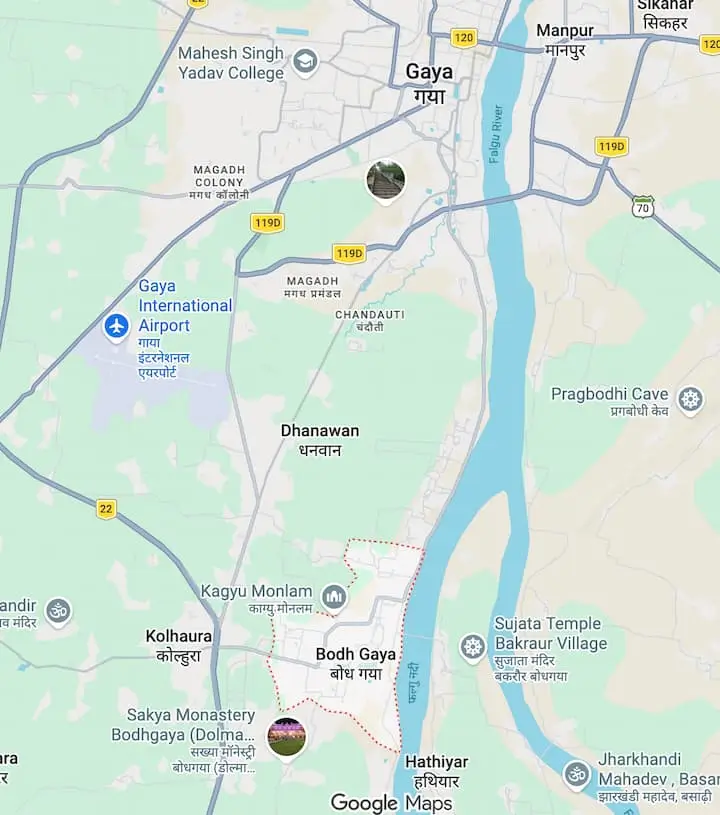
Anyways, we had rituals to perform at Gaya and that was the main purpose of our visit. We had to visit the Vishnupad temple, a Mangala Gowri temple, Seeta Kund, and a few small temples along the way.
The scenes at Vishnupad were un-nerving. There is a small rock in the middle of the temple that everyone must touch and take blessings of. Hundreds of people crammed into a small space with the local priests yelling at one another, shoving people, trying to take money off of the devotees – absolute mayhem is how I would characterize the temple.
I still cannot understand the significance of the temple due to the noise, commotion, and chaos. I prefer my temples quiet, calm, meditative.
Then, we went to a small temple in Sita Kund. The priest there made us raise our hands and recited some prayer in Hindi and told us to repeat after him. The funniest part is that, the “prayer” ended with us “promising to give the priest a minimum of Rs 101” … in all my years of praying, learning shlokas, I have never come across a prayer that had a monetary amount mentioned in it.
I hope the priest accounts for inflation in his future prayers ;)
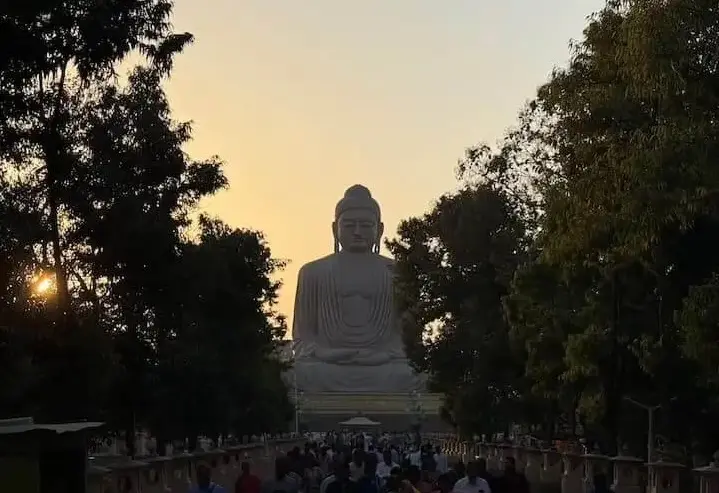
But, on the other side of the airport, lies Bodh Gaya - a town that hosts the Mahabodhi temple and the famed Bodhi tree, where Gautama Buddha attained enlightenment.
The town receives a lot of foreigners, primarily Buddhists, from Sri Lanka, Tibet, Nepal, Bangladesh, Japan, Korea, Thailand, Laos, Cambodia, and several other nations.
It has so many Buddhist monasteries and temples built by these different nationalities and boy, are they maintained well or what?
I think the Japanese Temple was the one that took my breath away. It was the epitome of quietness, meditation, deliberate action, and discipline. Not a single item was out of place, and one felt compelled to sit and participate in the silence.
I had the same experience under the famed Bodhi tree.
There were hundreds of devotees in that one spot, but, everyone was quiet, calm, meditating, chanting, or contemplating.
Absolutely nobody was shouting, screaming, clamoring, or fighting. They were there for one purpose and one only - connecting with the Buddha with their prescribed practises.
The atmosphere in most of the temples in Bodh Gaya is how I would want every temple in India to project. A temple is a spiritually-charged space that people should visit to experience, absorb, and if possible contribute back to the energy.
At the end of this 4 day trip, I came to a simple realization.
- On one end, Gaya was chaotic, people spitting paan on the walls, shoving each other, and you had to squint to find traces of our glorious spiritual past.
- 15 km away was Bodh Gaya that offered a glimpse into how organized, deliberate meditation, and spirituality should be.
Thank you!